
XIAMEN ACEY NEW ENERGY TECHNOLOGY CO., LTD.

Categorias
Novo Blog
Como Montar um Pacote de Bateria Cilíndrica: Guia de Processo e Equipamento
August 28 , 2026Como montar uma bateria cilíndrica: Guia de processo e equipamentos
As baterias cilíndricas usadas em ferramentas elétricas, bicicletas elétricas, drones, estações de energia portáteis e sistemas de armazenamento de energia podem variar bastante em voltagem, capacidade e estrutura, mas a maioria das linhas de produção segue uma sequência de montagem semelhante.
As principais etapas incluem classificação da capacidade das células, aplicação de papel isolante, triagem de tensão de circuito aberto (OCV) e resistência interna, arranjo das células, inspeção de polaridade, soldagem por pontos e testes do sistema de gerenciamento de bateria (BMS).einstalação, testes de embalagem, codificação e envelhecimento de carga e descarga concluídos.
Esses processos podem ser organizados como estações de trabalho offline, uma linha semiautomática ou uma linha de produção totalmente automatizada.
Processo de montagem de baterias cilíndricas
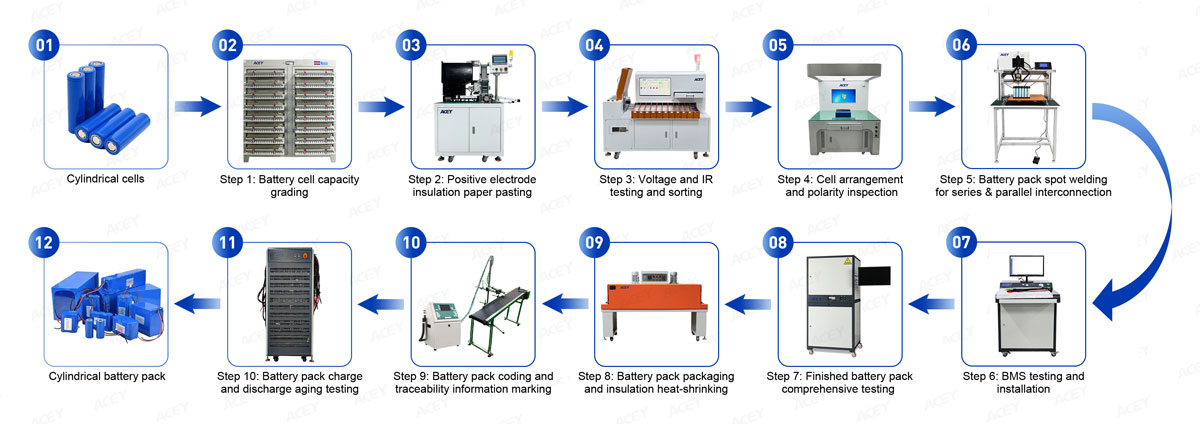
Classificação da capacidade das células → Aplicação de papel isolante → Classificação OCV e ACIR → Arranjo das células → Inspeção de polaridade → Soldagem por pontos → Teste e instalação do BMS → Teste do conjunto de baterias → Embalagem e codificação → Envelhecimento por carga/descarga
As primeiras etapas focam na consistência das células e no arranjo correto. A soldagem e a montagem do BMS estabelecem a conexão elétrica da bateria, enquanto os testes e o envelhecimento da bateria finalizada são usados para verificar a bateria montada antes do envio.
Componentes principais de um conjunto de baterias cilíndricas
Uma bateria cilíndrica é composta principalmente por:
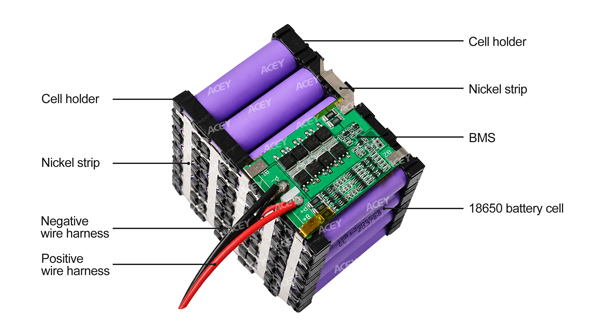
A ligação em série determina a tensão da bateria, enquanto a ligação em paralelo aumenta a capacidade e a corrente.
Tamanhos e aplicações comuns de células cilíndricas
Formatos de célula suportados
14500 · 18650 · 21700 · 26650 · 32650 · 32700 · 32140 · 33140
Nem todas as máquinas utilizam as mesmas ferramentas. Dispositivos de fixação, suportes de células e mecanismos de alimentação podem precisar ser trocados quando o diâmetro da célula, a altura ou a estrutura da embalagem mudam.
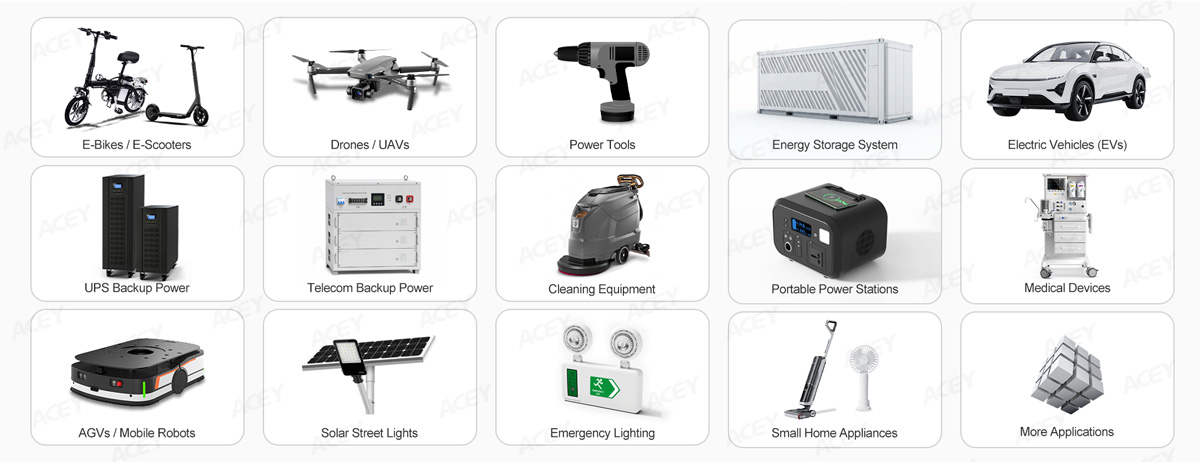
Aplicações típicas
Que equipamentos são usados para montar uma bateria cilíndrica?
Uma configuração completa de produção pode incluir os seguintes equipamentos:
| Processo | Propósito | Equipamento |
| Classificação de capacidade | Meça e agrupe as células por capacidade. | Máquina de classificação de células de bateria |
| Isolamento | Aplique papel isolante no terminal positivo. | Máquina de colagem de papel isolante |
| Classificação OCV e ACIR | Agrupe as células por voltagem e resistência. | Máquina de triagem de baterias |
| Inspeção de polaridade | Verificar terminais positivo e negativo da bateria | Máquina de teste de polaridade CCD |
| Conexão elétrica | Soldar as tiras de ligação às células | Máquina de solda por pontos para bateria |
| Verificação BMS | Funções de teste da placa de proteção | Testador BMS |
| Teste de embalagem concluído | Verificar o desempenho do pacote montado | Testador completo de baterias |
| Embalagem | Aplique filme termoencolhível | Máquina de termoencolhimento |
| Identificação | Imprimir informações sobre lote e produto | Máquina de Codificação |
| Envelhecimento | Executar ciclos de carga e descarga | Testador de envelhecimento de baterias |
Para protótipos ou produção em pequenos lotes, diversas operações podem permanecer manuais. Linhas de produção em larga escala automatizam os processos que mais afetam a consistência e a produtividade, especialmente a triagem, a inspeção de polaridade, a soldagem e os testes.
Etapa 1 — Classificação da capacidade celular
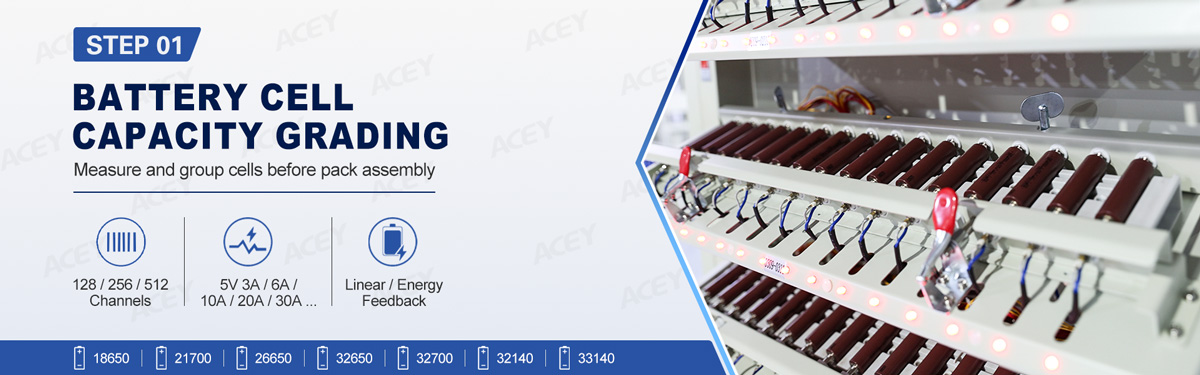
Antes da montagem, as células são carregadas e descarregadas para medir a capacidade útil e o desempenho básico.
O objetivo é evitar que células com capacidades muito diferentes — resultantes da depleção ou perda de carga durante armazenamento ou transporte prolongado — sejam agrupadas no mesmo conjunto de baterias. Células mais fracas limitam o desempenho útil de toda a montagem em série ou em paralelo.
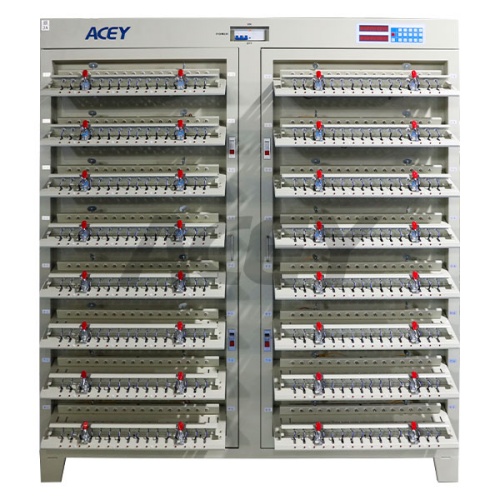
UM litiumíon máquina de classificação celular Executa ciclos programados de carga e descarga em vários canais e registra os dados de cada célula.
Os sistemas de classificação ACEY podem ser configurados para formatos cilíndricos comuns, tais como:
18650 · 21700 · 26650 · 32650 · 32700 · 32140 · 33140
As configurações disponíveis incluem:
Para o processamento de células em grande volume, a classificação multicanal permite que centenas de células sejam testadas simultaneamente antes de entrarem na fase de montagem da bateria.
Equipamento recomendado: Máquina de classificação de células de bateria
Etapa 2 — Aplicação do papel isolante
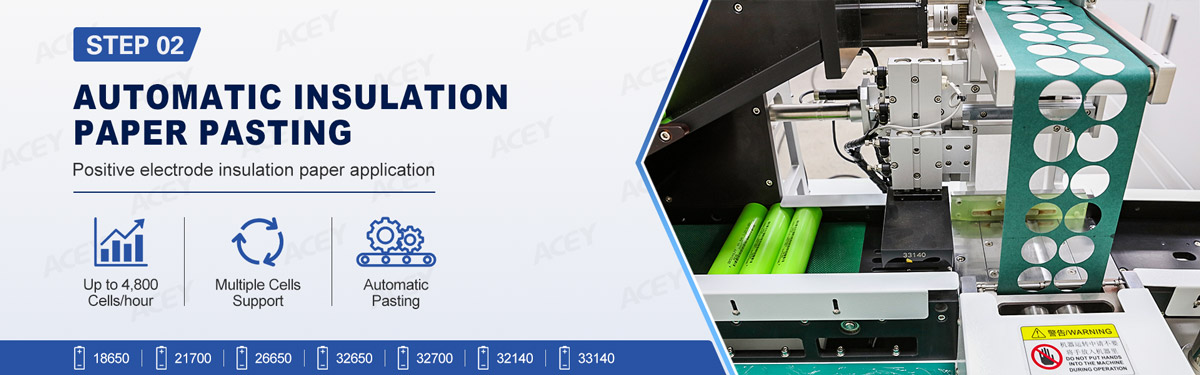
Após a classificação capacitiva, aplica-se papel isolante ao redor do terminal positivo.
Esse isolamento adicional ajuda a separar a área do terminal positivo da carcaça metálica da célula (ânodo) durante a montagem.
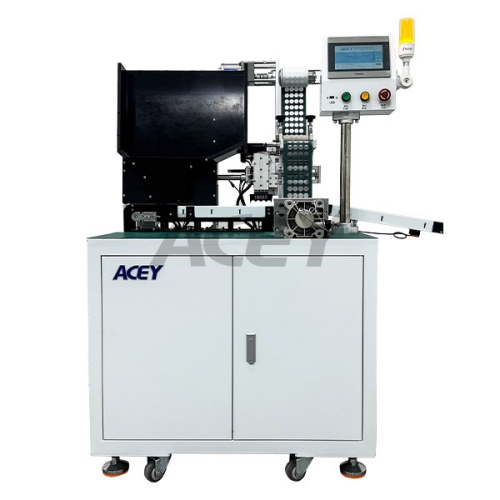
Ummáquina automática de colagem de papel isolanteCorta e aplica o papel com posicionamento consistente. As máquinas ACEY podem ser equipadas com ferramentas intercambiáveis para diferentes células cilíndricas.
A velocidade de produção pode chegar a 4.800 células por hora, dependendo da configuração da célula e da máquina.
Os formatos comuns incluem:
18650 · 21700 · 26650 · 32650 · 32700
Larger cylindrical cells such as 32140 and 33140 require suitable tooling and machine configuration.
Recommended Equipment: Battery Insulation Paper Sticking Machine
Step 3 — OCV and Internal Resistance Sorting
Capacity grading alone is not enough for final cell matching.
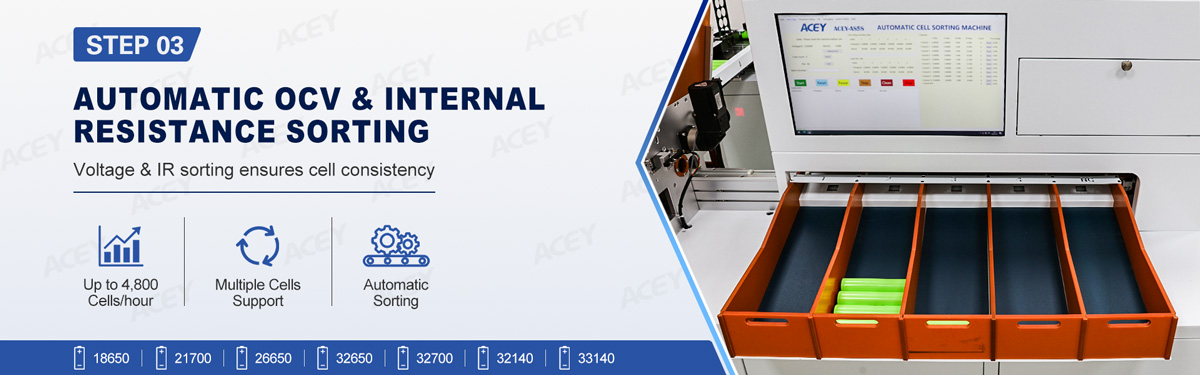
Before assembly, it is also necessary to measure theopen-circuit voltageandAC internal resistanceof the battery cells to ensure the consistency of the battery pack.
The measured values are compared with preset ranges, and the cells are automatically separated into different groups.
ACEY cylindrical battery sorting machines are available with standard 5-, 6-, 10-, or 11-channel configurations, with customized options also available. They can be integrated with branded testers such as the HIOKI BT3561 or other compatible instruments to measure open-circuit voltage (OCV) and AC internal resistance.
Barcode scanning can also be added when the production process requires cell-level traceability.
Cells with large differences in voltage or resistance may behave differently under charge and discharge. Sorting helps the manufacturer build packs from cells with closer electrical characteristics.
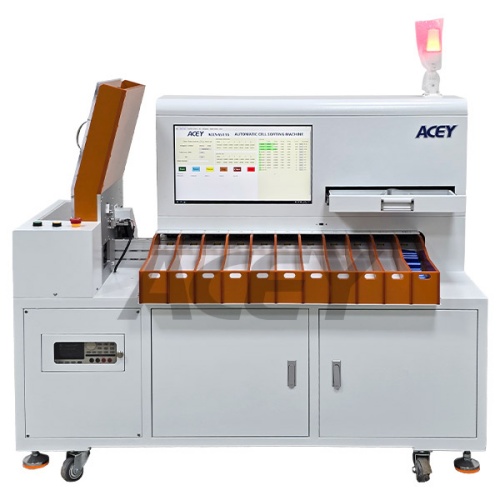
For production lines that combine insulation paper application and sorting, these processes can also be integrated to reduce repeated cell handling.
Recommended Equipment: Cylindrical Battery Sorting Machine
Step 4 — Cell Arrangement and Polarity Inspection
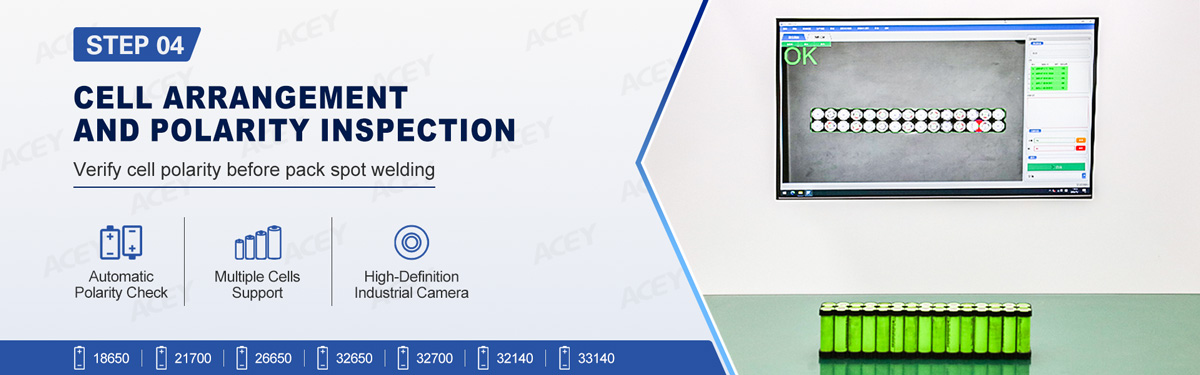
Sorted cells are placed into the required series-parallel arrangement using cell holders or dedicated fixtures.
Before welding, the positive and negative orientation of every cell should be checked.
For small production runs, this may be done manually. On semi-automatic and automatic lines, a CCD polarity inspection system is more reliable because it checks the complete cell group against the preset pattern.
ACEY CCD inspection systems can be configured for cylindrical cells including:
18650 · 21700 · 26650 · 32650 · 32700 · 32140 · 33140
Any reversed or incorrectly positioned cell can be identified before the pack enters the welding station.
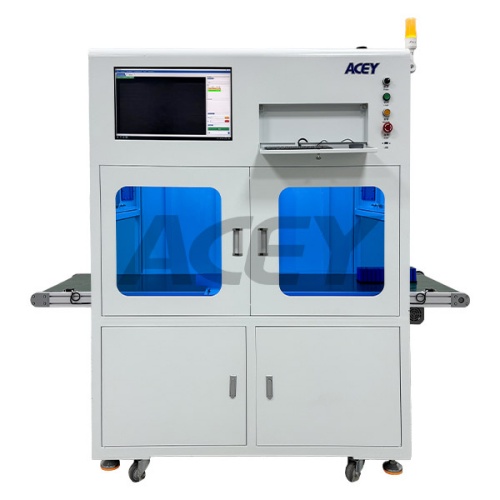
Recommended Equipment: CCD Tester
Step 5 — Battery Pack Spot Welding
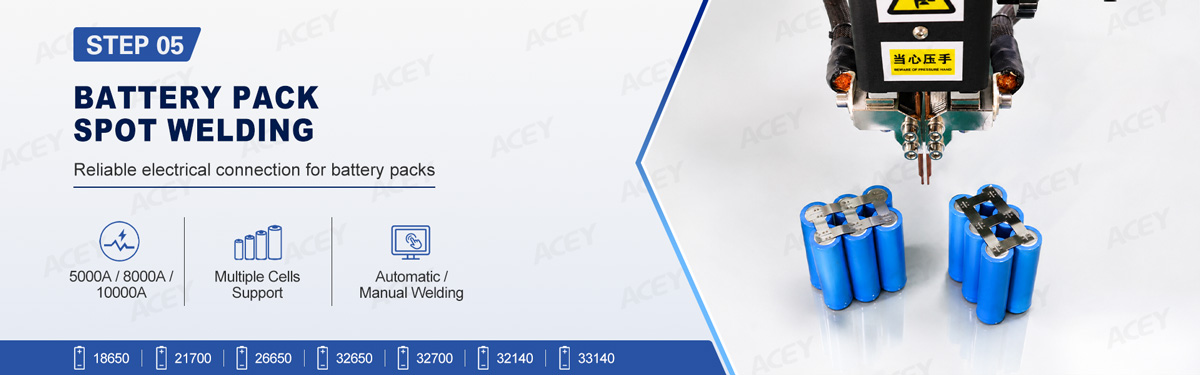
Spot welding is one of the most important operations in cylindrical battery pack assembly.
The cells are connected in series and parallel by welding nickel or nickel-plated connecting strips to the cell terminals.
The welding result is affected by more than welding current. The main process variables include:
ACEY provides 5000A, 8000A and 10000A DC inverter or transistor welding power supply configurations for cylindrical battery pack assembly.
Machine options include:
Automatic models can store welding programs for different battery pack designs and move between preset welding positions.
For production use, welding parameters should be validated with the actual cell and connecting strip. A parameter that works well on one battery pack should not automatically be copied to another design.
The inspection criteria may include weld appearance, connection strength and electrical resistance according to the manufacturer’s own process standard.
Recommended Equipment: Battery Pack Spot Welding Machine
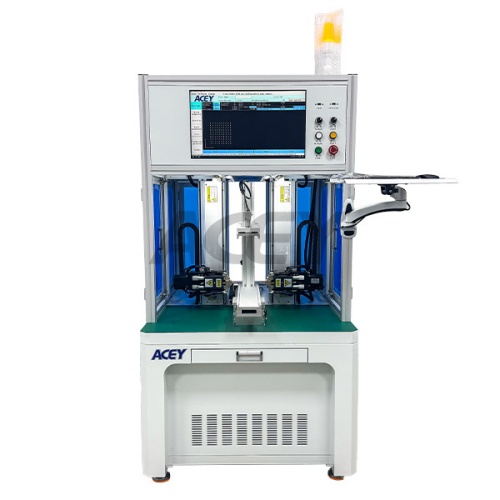
Step 6 — BMS Testing and Installation
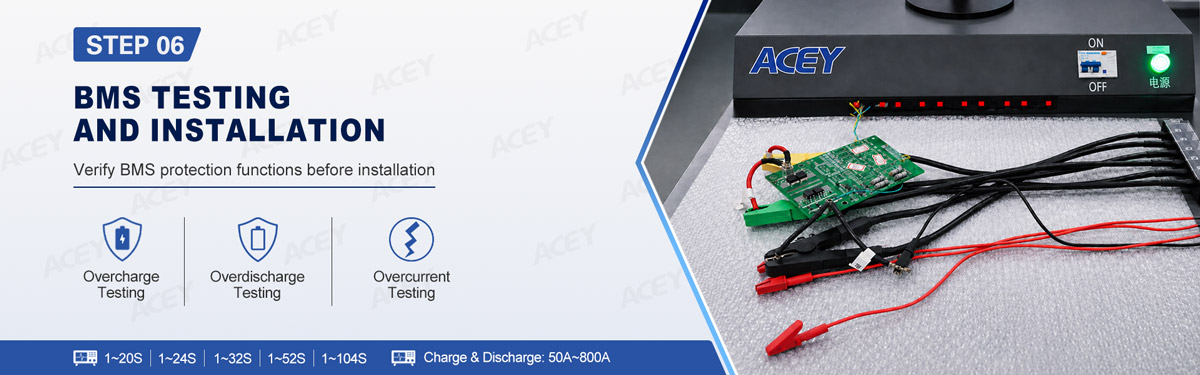
After the cell groups are electrically connected, the battery management system is installed according to the pack design.
Before installation or final integration, the BMS can be tested to verify its protection functions.
A BMS tester mainly check functions such as:
The required test range is determined by the BMS series count, voltage and current rating.
After BMS verification, assembly work includes:
This part of the process varies significantly from one battery pack to another. BMS specifications and electrical drawings are therefore important when configuring the assembly workstation or production line.
Recommended Equipment: BMS Tester
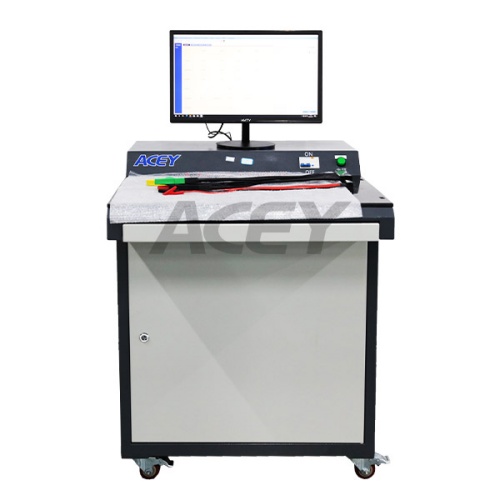
Step 7 — Finished Battery Pack Testing
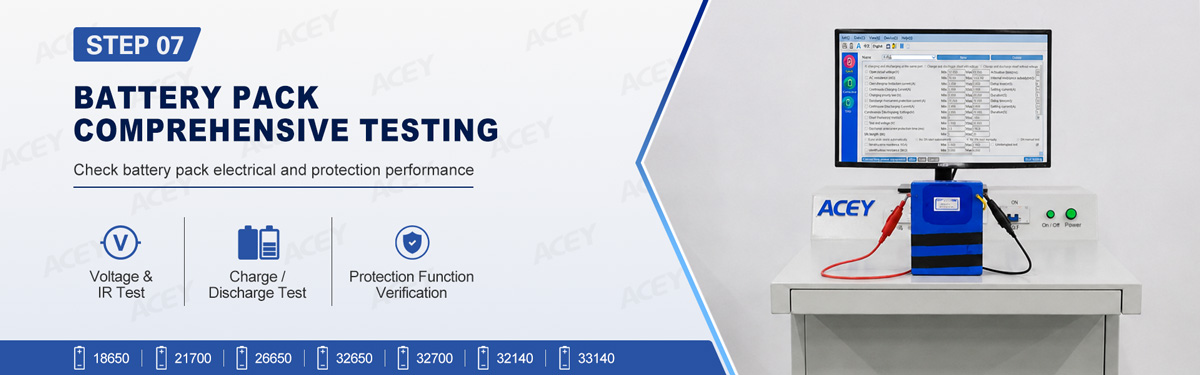
Once the BMS, wiring and electrical connections are complete, the battery pack is tested as a finished assembly.
This step checks components and connections introduced during battery pack assembly rather than the performance of an individual cell.
A battery comprehensive tester can be configured to test:
Upper and lower limits are set in the test program, allowing the equipment to identify qualified and unqualified packs.
Finished pack testing is particularly useful for detecting problems related to:
ACEY provides different voltage and current configurations for small and larger battery packs.
Recommended Equipment: Battery Comprehensive Tester
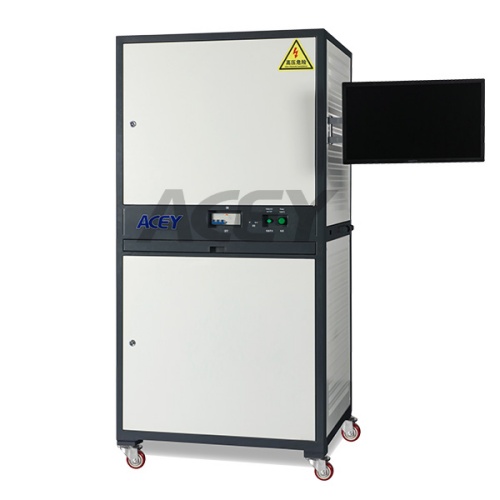
Step 8 — Battery Pack Packaging
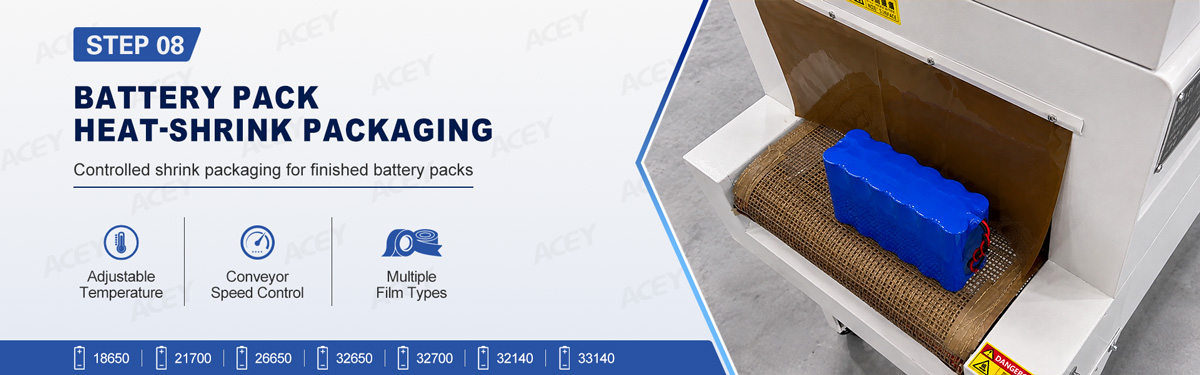
After electrical testing, the pack is prepared for final packaging.
The packaging method may include:
For heat-shrink packaging, the pack passes through a temperature-controlled shrink tunnel.
ACEY heat shrink machines are available with adjustable conveyor speed and temperature settings for different pack sizes and film materials.
Recommended Equipment: Automatic Heat Shrink Wrap Machine
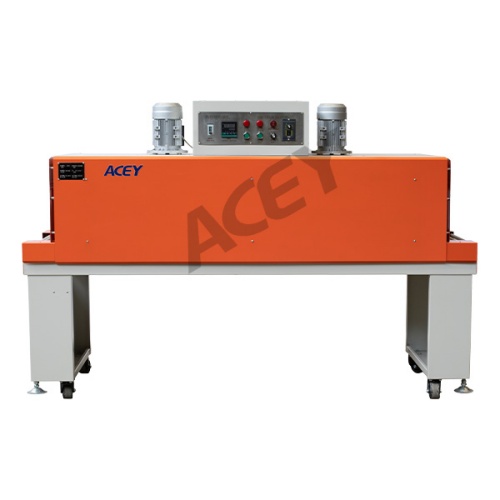
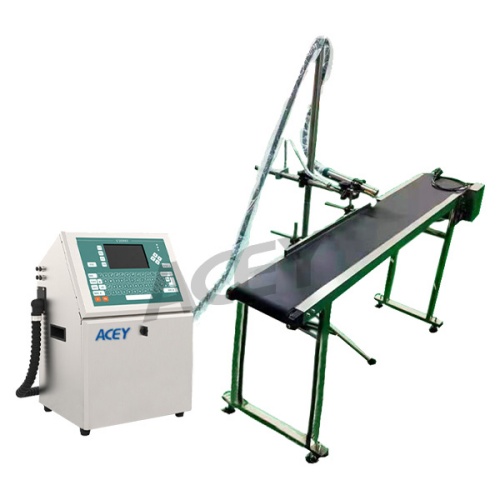
Step 9 — Coding and Traceability
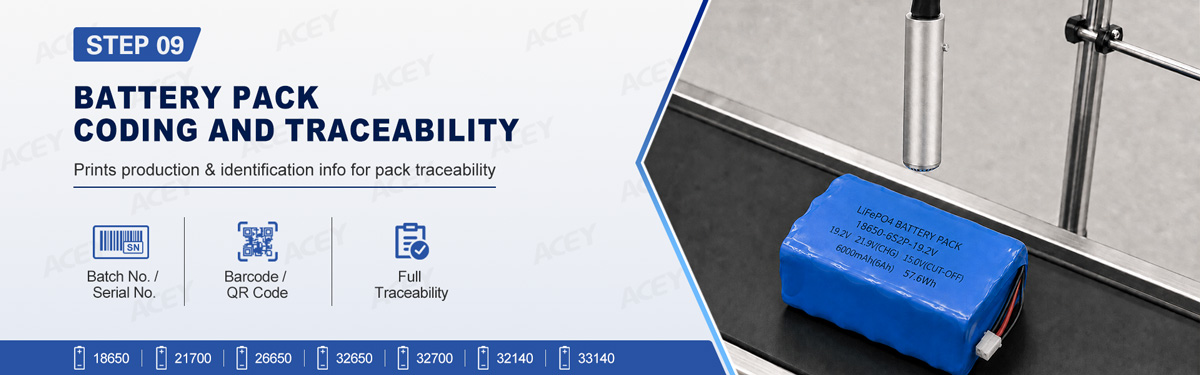
Pack identification is added before shipment or aging.
Printed information includes:
A handheld printer may be enough for small-batch production, while conveyor-based or continuous inkjet printers are more suitable for production lines.
If traceability is required, the printed code can be linked with earlier cell or pack test records.
Recommended Equipment: Battery Pack Coding Machine
Step 10 — Charge/Discharge Aging
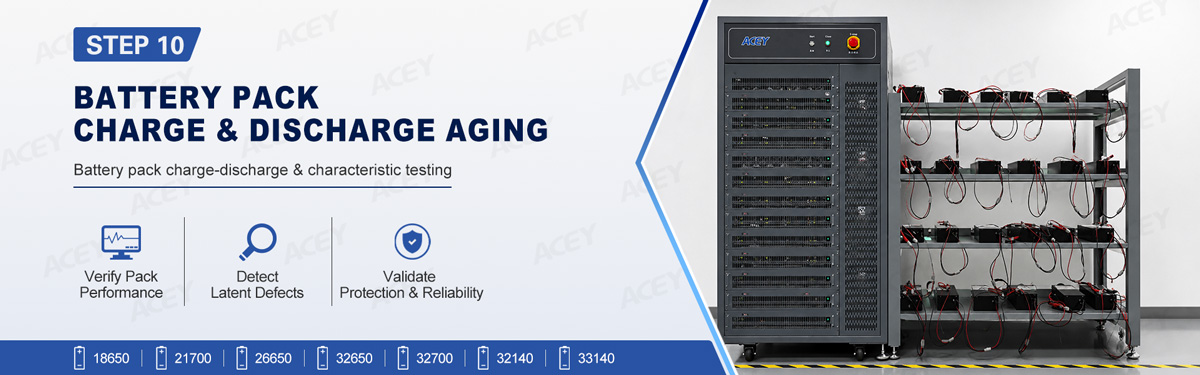
Aging is one of the final electrical verification steps.
The battery pack is charged and discharged according to a programmed test sequence. The system can record:
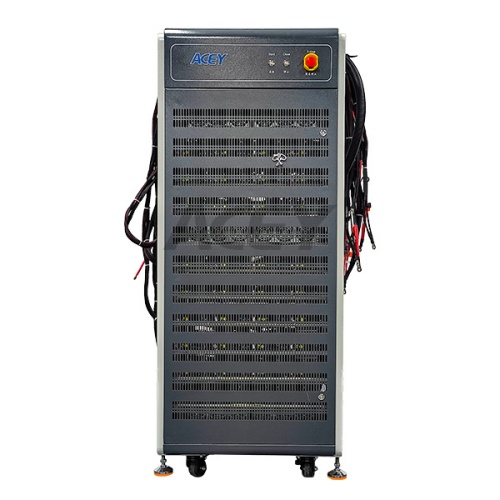
ACEY battery pack charge-discharge and aging systems cover a wide range of battery pack applications.
Available configurations include:
The selected tester must cover the pack’s maximum voltage and required charge/discharge current. Channel quantity is usually selected according to the planned production output and aging time.
For higher-power applications, energy-feedback systems can return part of the discharge energy to the electrical network instead of dissipating it only as heat.
Recommended Equipment: Battery Pack Aging Machine
Semi-Automatic or Fully Automatic?
The higher automation option is not always the better choice.
A semi-automatic production setup is more flexible when the manufacturer produces several battery pack models or changes fixtures frequently.
| Factor | Semi-Automatic Line | Fully Automatic Line |
| Production Volume | Small to medium | Medium to high |
| Investment | Lower | Higher |
| Changeover | More flexible | More dependent on tooling and line design |
| Labor | More manual operations | Lower labor requirement |
| Integration | Standalone or partially connected equipment | Integrated material flow |
| Traceability | Added where required | Easier to integrate across multiple processes |
Many cylindrical battery pack lines use a combination of both.
For example, cell sorting, CCD polarity inspection and automatic spot welding can be automated, while BMS installation, wiring or enclosure assembly remains manual.
This approach often gives better flexibility than trying to automate every process from the beginning.
How to Configure Cylindrical Battery Pack Assembly Equipment
The equipment should be selected from the actual battery pack design rather than only from the cell model.
Two 21700 battery packs may require completely different fixtures, welding machines and test systems if their series-parallel configuration, current requirement and mechanical structure are different.
Before equipment selection, it is useful to confirm the following information.
Cell Information
Battery Pack Design
Welding Information
BMS Information
Production Requirement
Testing Requirement
These details make it much easier to match each machine to the actual process and avoid buying equipment with either insufficient capacity or unnecessary specifications.
ACEY Cylindrical Battery Pack Assembly Solutions
ACEY supplies individual machines, semi-automatic production equipment and fully automatic assembly solutions for cylindrical lithium battery packs.
Equipment can be configured for cells including:
18650 · 21700 · 26650 · 32650 · 32700 · 32140 · 33140
Available processes cover:
For production-line projects, the configuration is developed around the customer’s battery pack, required output and test process rather than from a fixed machine list.
Planning a Cylindrical Battery Pack Project?
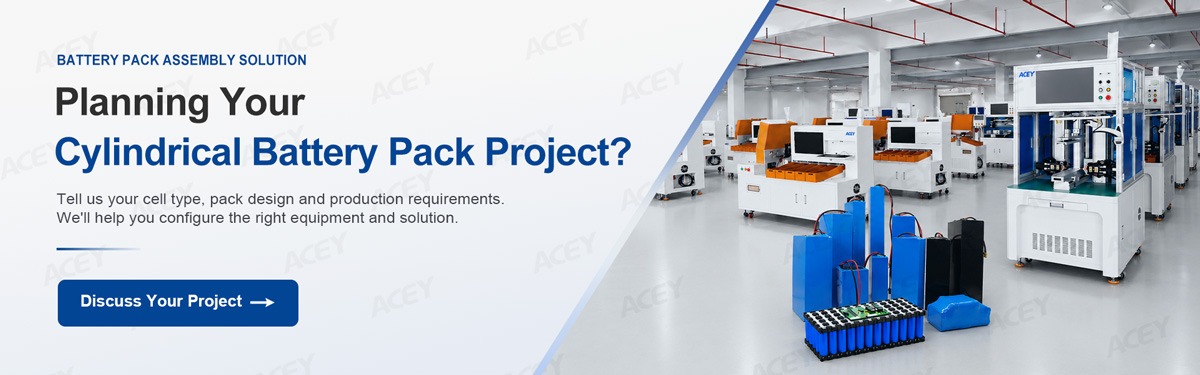
Please provide:
This information allows us to recommend the required machines, tooling, welding configuration and test system for the actual pack.
Discuss Your Battery Pack Assembly Project →
Frequently Asked Questions
*What machines are needed to make a cylindrical battery pack?
A typical production setup may include a cell grading machine, insulation paper sticking machine, OCV/IR sorter, CCD polarity tester, spot welder, BMS tester, battery comprehensive tester, packaging machine, coding machine and battery pack aging tester.
Small-batch production does not necessarily require all processes to be automated.
*What cylindrical cells can be used?
Common formats include 18650, 21700, 26650, 32650, 32700, 32140 and 33140.
Whether one machine can handle several cell sizes depends on its mechanical range and tooling. Fixtures, feeders and holders may need to be changed when switching cell formats.
What is the difference between capacity grading and OCV/IR sorting?
Capacity grading measures cell capacity through charge-discharge testing.
OCV/IR sorting measures open-circuit voltage and internal resistance and groups the cells according to preset ranges.
They are different steps and are often used together before battery pack assembly.
Why check cell polarity before welding?
A reversed cell can create the wrong series-parallel connection once the nickel strip is welded.
CCD inspection checks the complete cell arrangement before welding and identifies cells placed in the wrong direction.
What type of spot welder is used for cylindrical battery packs?
Resistance spot welding is commonly used for nickel and nickel-plated connecting strips.
ACEY provides 5000A, 8000A and 10000A welding power supply, including gantry, single-side automatic and double-side automatic configurations.
Os parâmetros da máquina e da soldagem devem ser selecionados de acordo com o terminal da célula, o material da tira, a espessura da tira e o padrão de soldagem.
Qual a diferença entre a massa de bater?Por que você inclui testes abrangentes e testes de envelhecimento?
Uma mesma linha de produção pode fabricar diferentes tipos de baterias?
Sim, mas não sem uma mudança.
Caso o diâmetro da célula, as dimensões da embalagem ou o padrão de soldagem sejam alterados, o suporte, o dispositivo de fixação, o alimentador ou o programa de soldagem também precisarão ser modificados.
As linhas semiautomáticas oferecem mais flexibilidade para clientes que produzem diversos modelos de baterias.
Que informações a ACEY precisa antes de recomendar uma linha de produção?
A informação mais útil é:
Com esses detalhes, o equipamento e as ferramentas podem ser selecionados de acordo com o conjunto de baterias específico, em vez de usar uma configuração de linha genérica.
703, 7F, Zhonghengji Building, No.223, Qishan North Road, Huli District, Xiamen, Fujian, China
O email : allen@xmacey.com
Tel : +8618950009155
Whatsapp : +8618950009155